
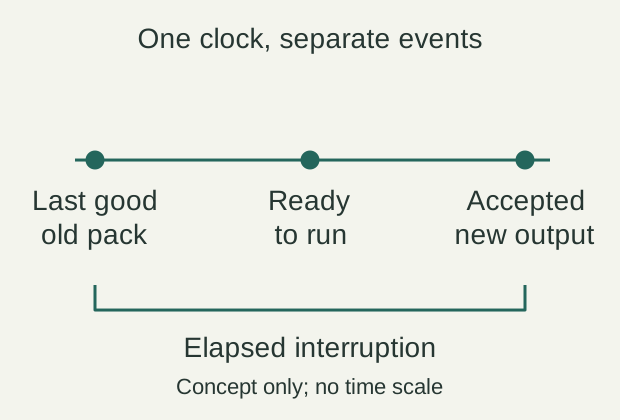
A changeover can appear shorter simply because someone stopped the clock earlier. Measure the interval from the last accepted pack of the old run to the first accepted output of the new run, using a restart criterion agreed before observation.
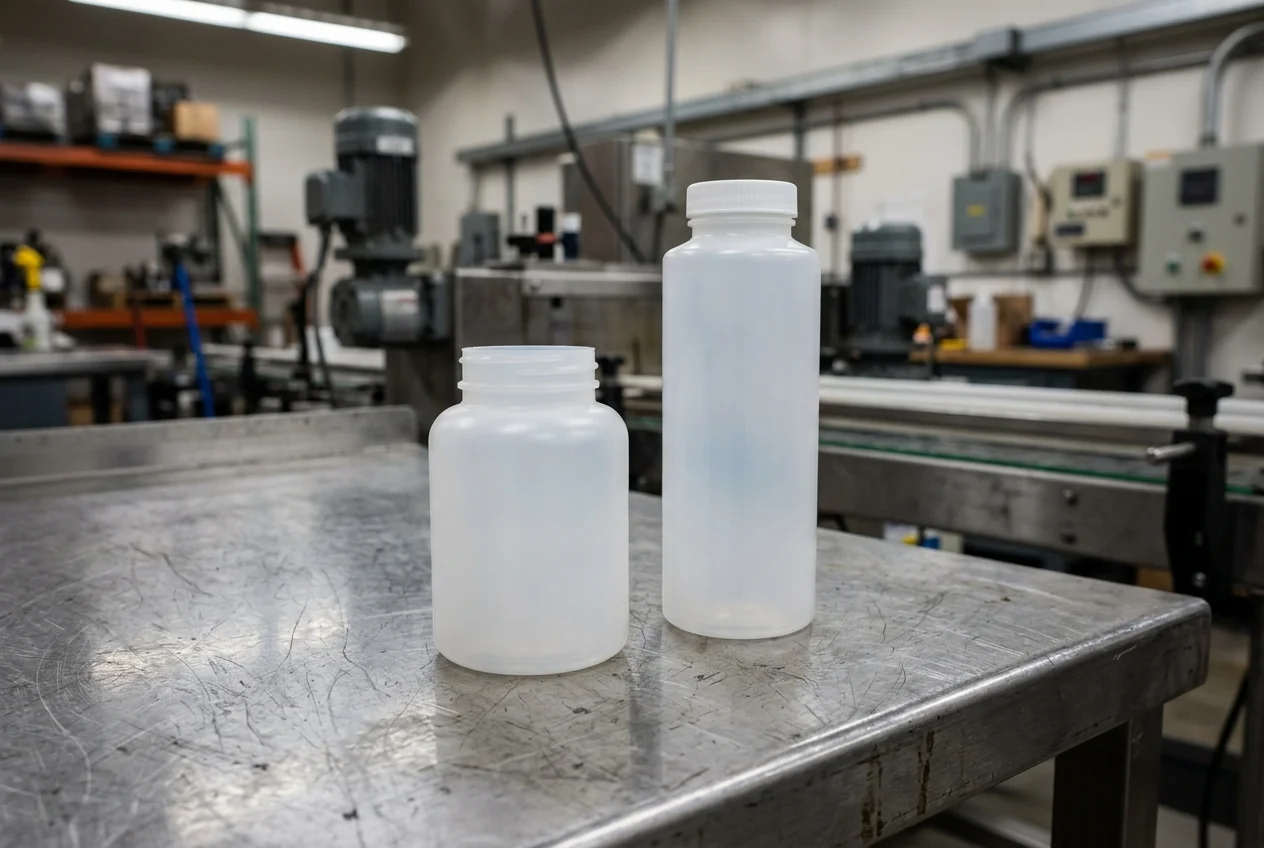
For a useful baseline, keep the format pair, product and acceptance rule with the elapsed time. Record advance preparation and labour separately, and mark waits that prevent the next activity. This proposed timing sheet helps a line team decide what to prepare earlier and what actually delays accepted production; it does not set a universal changeover target.
Agree where the clock starts and stops
Use observable events. “Machine stopped” may occur after the old product has already run out, while “machine started” may occur before any new pack is acceptable. Either can hide production loss if used without explanation.
| Event | Record at the line | Boundary to agree |
|---|---|---|
| Last accepted old output | Timestamp, SKU and batch | Which discharge point supplies the observation? |
| Old run cleared | Timestamp and clearance reference | Does downstream work remain? |
| Mechanically ready | Timestamp and responsible station | Are material and recipe checks complete? |
| First new pack accepted | Timestamp and acceptance reference | What must quality or production confirm? |
| Stable run confirmed | Timestamp and observation window | What output and stop criteria define stability? |
The first-to-fourth interval is the changeover measure proposed here. Keep the fifth event as a separate recovery measure if the first accepted pack is followed by repeated stops. You can use a different local convention, but retain its definition on every comparison.
Separate elapsed time from work content
Parallel work reduces elapsed interruption only when it removes a dependency. If two people work at once, adding their task durations gives labour time, not the line’s stop duration. For each observation, log start and finish events against the same clock and note who or what is waiting.
The Lean Enterprise Institute’s SMED description separates work that requires stopped equipment from preparation that can occur while production runs. Apply that distinction to the task rather than to a whole department. A part may be collected in advance, but its installation can still require a stopped, safely isolated machine under the site’s procedure.
| Activity | Start / finish | Person or station | Depends on | Stop required? | Waiting reason |
|---|---|---|---|---|---|
| Collect approved parts | ___ / ___ | ___ | Correct format identity | Confirm locally | ___ |
| Clear old materials | ___ / ___ | ___ | Old-run completion | Confirm locally | ___ |
| Change format hardware | ___ / ___ | ___ | Clearance and safe access | Per machine procedure | ___ |
| Load approved settings | ___ / ___ | ___ | Version check | Per machine procedure | ___ |
| Verify new output | ___ / ___ | ___ | Available product and material | Process-specific | ___ |
Keep overlapping rows. Do not compress the observation into a single number before reviewing the sequence.
Move preparation only after checking its conditions
Start with repeatable delays you can remove without changing acceptance or safety requirements. Missing parts, an unapproved specification or an unavailable material roll can leave a prepared machine idle. Assign an owner and a readiness check to each proposed change.
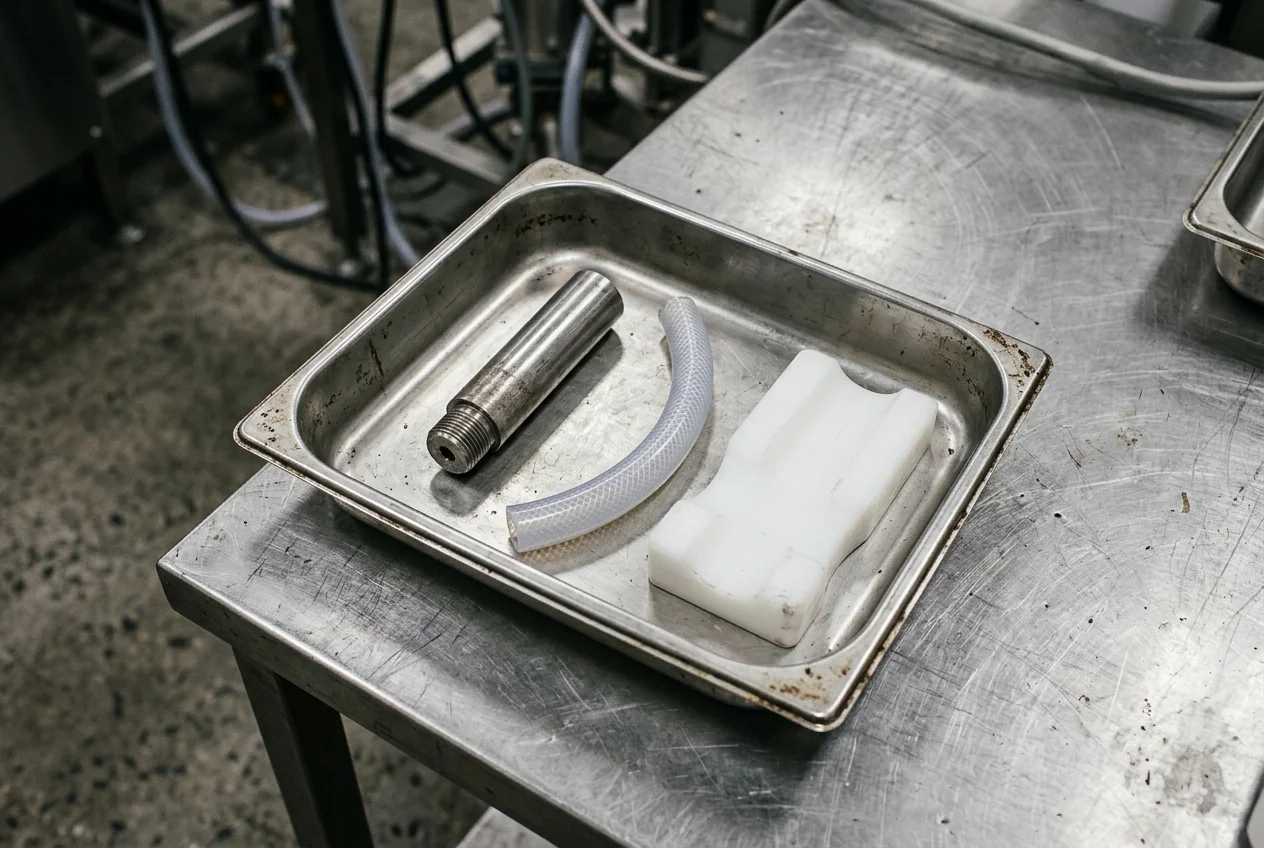
For example, a dedicated tray can make the next format’s parts easier to locate. The tray still needs an identity check, a known condition and a defined storage location. Moving an unverified part closer to the line has not completed preparation.
Recipe recall can reduce repeated data entry on equipment that supports it. Liquid Packaging Solutions describes saved filling-cycle recipes alongside physical guide and height changes. That illustrates why a recipe selection does not cover all setup work. For the station-level detail, use the filling changeover and first-off checks.
Compare matched transitions after the change
Repeat the same observation method before crediting an improvement. Keep a transition table rather than mixing all changeovers into one average. A same-container recipe adjustment and a new-container/product transition do not represent the same work.
| Comparison field | Baseline | Revised method |
|---|---|---|
| Old / new product and format | ___ | ___ |
| Crew and responsibilities | ___ | ___ |
| Clock boundary and discharge point | ___ | ___ |
| Advance preparation completed | ___ | ___ |
| Elapsed interruption | ___ | ___ |
| Restart rejects and subsequent stops | ___ | ___ |
| What changed in the method | ___ | ___ |
If a result improves only because acceptance was deferred, report that separately. If one task got faster but the line waited for a different station, investigate the new dependency before making a capacity claim. The RoboSELEX claim analysis applies this boundary problem to a published supplier example.
Methods and sources
This is an editorial measurement proposal based on the Lean Enterprise Institute’s distinction between internal and external setup and LPS’s account of filling adjustments and recipe recall. The tables are blank working records, not observed production data. Local operating, isolation and release procedures govern the actual work. Source text was retrieved on 16 October 2026; continue with line optimization for related trial decisions.
Source documents read:
- Single Minute Exchange of Die (retrieved 16 October 2026).
- Simplifying Changeover for Liquid Filling Machines (retrieved 16 October 2026).