
Recalling a filling recipe does not establish that the next container will fit or that the product path is ready. Check the container, the installed contact parts and the selected recipe together, then approve the first-off result against the actual product specification.
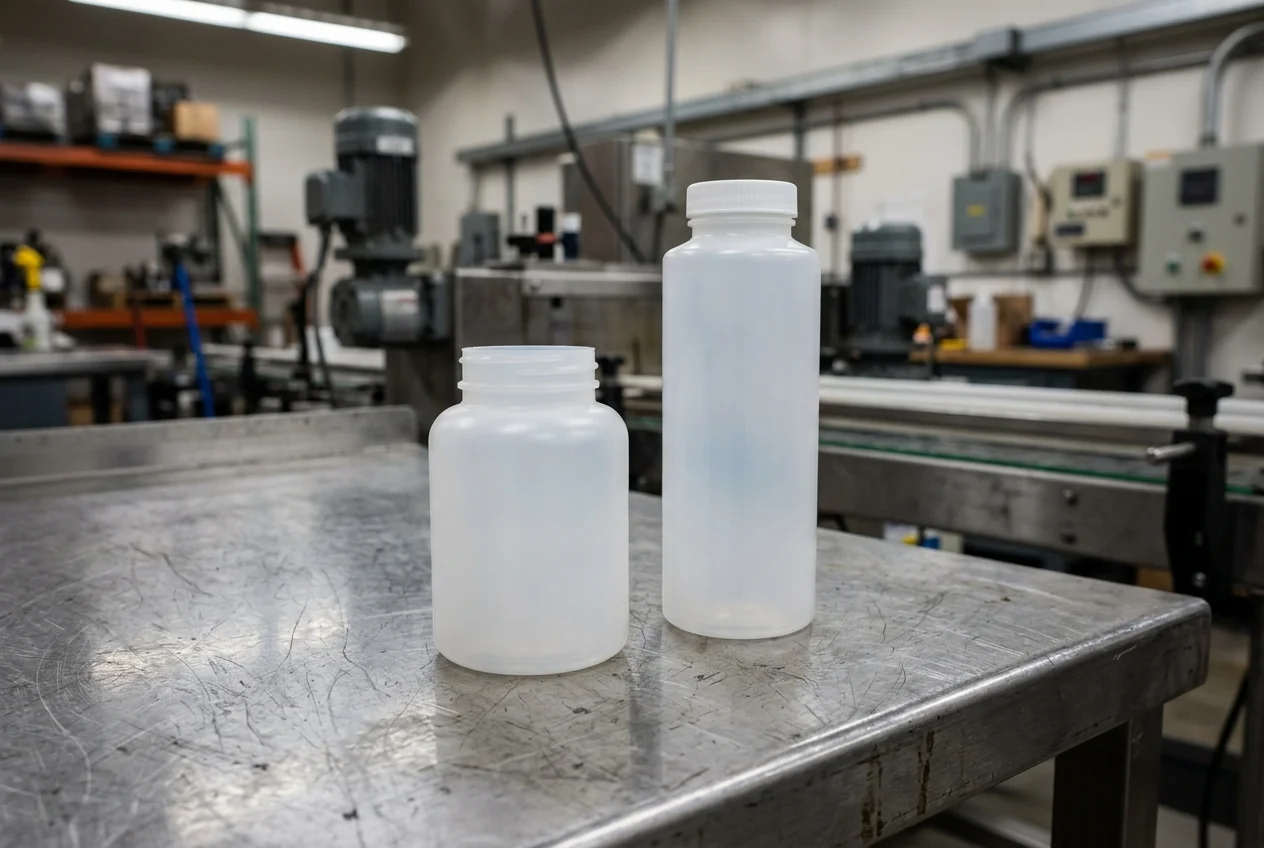
A filling-machine changeover needs separate evidence for mechanical fit and product acceptance. Use the record below for a liquid filling station: it covers guides, fill-head position, contact-part identity, recipe revision and first-off checks. The responsible process owner must provide tolerances, cleaning requirements and release authority before the trial.
Match the container to the station
Check the actual container sample against its approved drawing. A nominal capacity does not describe the base, neck opening or shoulder that interacts with the station. Keep the old and new formats together during planning, and mark which adjustments or replacement parts the equipment manual requires.
| Input or item | Value or source | Why it matters |
|---|---|---|
| Container revision | Approved drawing and physical sample | Prevents a similar-looking bottle being treated as equivalent |
| Neck and opening | Drawing plus sample | Defines the nozzle entry and clearance task |
| Body and base | Filled and empty samples where relevant | Defines transport support and guide contact |
| Fill target and limits | Product specification | Gives the first-off check an acceptance basis |
| Installed format parts | Machine parts list | Connects the sample to the actual hardware |
Liquid Packaging Solutions describes rail adjustments and fill-head height changes as physical parts of its equipment changeover. That source supports the distinction between setup geometry and the filling cycle. It is not a setup instruction for every filler.
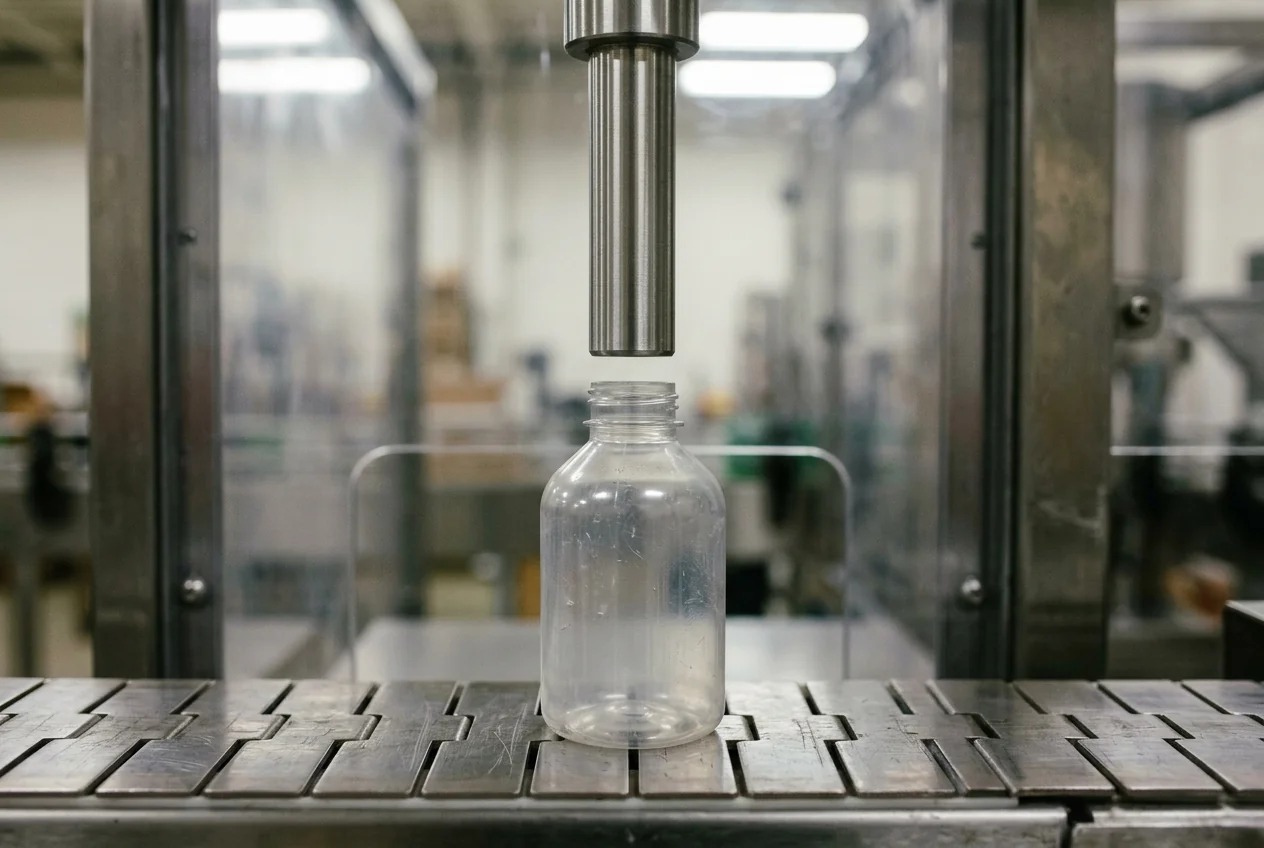
Before starting, confirm the specified nozzle position, container entry and discharge behaviour under the machine’s procedure. Do not infer a safe working clearance from the illustrative picture. Record observed contact or instability rather than repeatedly compensating for it with timing changes.
Verify the product-contact path
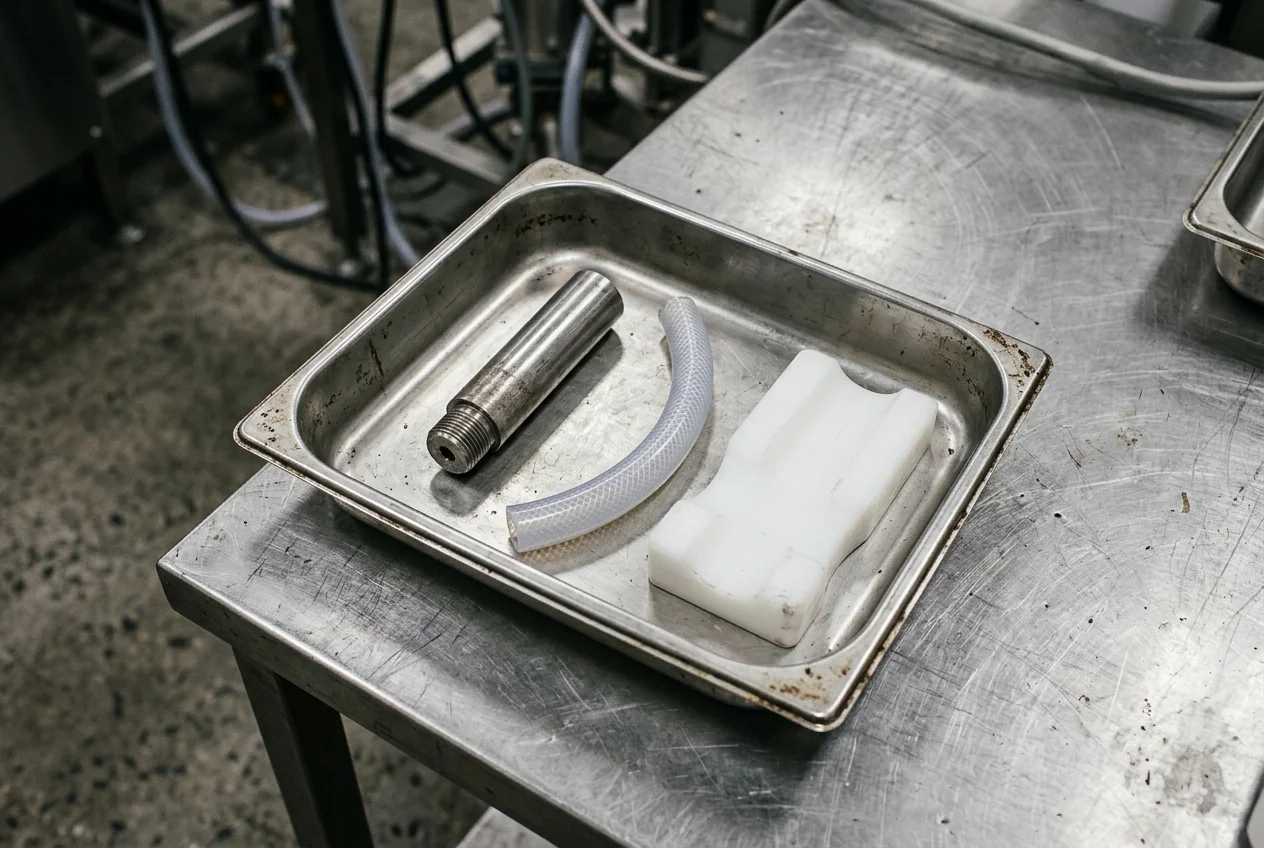
Use an identified parts list and the approved cleaning or replacement procedure. A nozzle and hose that look correct can still belong to another configuration. Check the full defined path, including connections and any retained product locations the equipment documentation identifies.
| Check | Evidence to enter | Hold the start if |
|---|---|---|
| Product and bulk source | Product name, revision and batch | Identity or release status is unclear |
| Contact set | Nozzle, hose and other applicable part IDs | Installed set cannot be matched to the record |
| Cleaning or replacement | Approved record reference | Required confirmation is missing |
| Reassembly | Procedure reference and completion | A connection or part remains unresolved |
| Product availability | Readiness confirmation | The source cannot support the agreed trial |
LPS says cleaning-in-place can be an equipment option. The presence of that option does not establish a validated cleaning cycle for your product pair. Have the process owner determine the required method; this checklist supplies no chemical recipe or cleaning time.
Confirm the recipe without treating it as a release
Compare the loaded settings with the approved version before running the new batch. LPS describes storing fill-cycle delays and durations, including bottle indexing, in recipes. A recalled value can therefore be internally consistent yet wrong for the container actually installed.
Record the recipe ID, revision and the person confirming the match. If an authorized adjustment is made during the trial, retain the old value, new value, reason and resulting check. Otherwise a successful restart cannot be reproduced, and a later operator may unknowingly restore the earlier setting.
Record the first-off result
Approve output using checks chosen for the actual filling method and product. A fill-to-level process and a measured-dose process need different interpretations, so do not adopt the same acceptance rule by default. Use the product specification and the equipment’s verification procedure.
| First-off observation | Requirement reference | Actual result | Decision / owner |
|---|---|---|---|
| Correct container and product | ___ | ___ | ___ |
| Fill quantity or specified level | ___ | ___ | ___ |
| Nozzle contact and container stability | ___ | ___ | ___ |
| Drips, foam or product on sealing surfaces | ___ | ___ | ___ |
| Entry, indexing and discharge | ___ | ___ | ___ |
| Retained sample / record reference | ___ | ___ | ___ |
Keep startup material under the agreed disposition until acceptance is complete. If the station needs repeated corrections, record them with the new output rather than ending the observation at the first movement. Use the line changeover timing sheet when the question extends beyond this filling station.
Methods and sources
This checklist translates LPS’s published explanation of physical adjustments, recipe recall and optional cleaning into a proposed first-off record. Its public piston-filler brochure was also checked in the local research archive for the described product path and setup features. No machine-specific setting, fill tolerance or cleaning validation is supplied. Sources were retrieved on 16 October 2026. Return to packaging machinery to select the next trial task.
Source documents read:
- Simplifying Changeover for Liquid Filling Machines (retrieved 16 October 2026).